
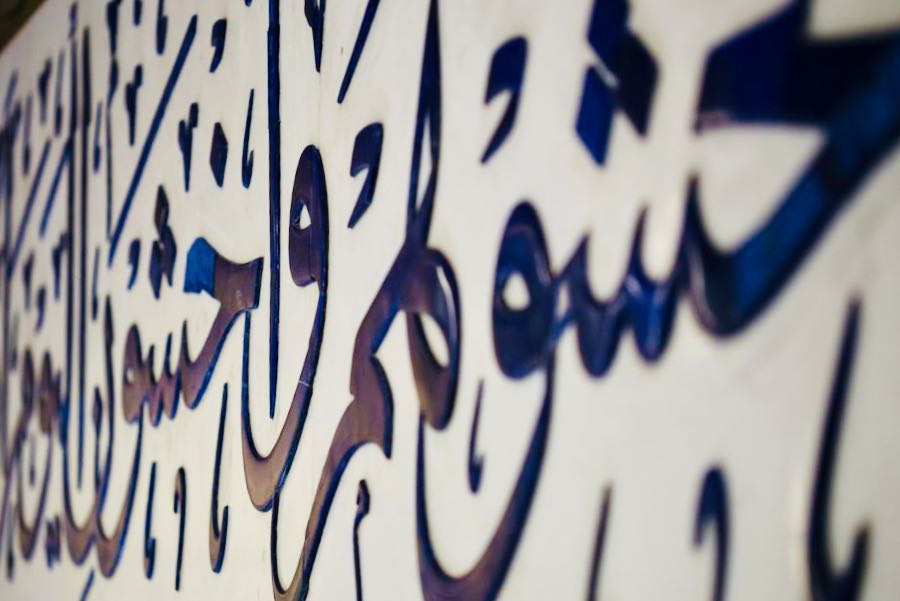
The discovery of our body, the desire of exploring it to learn the secrets of pleasure, the explosions of joy in sharing it with someone else in a love hug, namely our sexuality, is disciplined by prohibition in many religions, and it’s the subject of various taboos. Rules concerning sexuality are seen as repressive and castrating, the best way to control single individuals and groups: sex as sin, a sin that generates shame and dangerous feelings of guilt. Yet, do we really know what “sin”, usually translated with “Haram”, really means in Islam? Serena Tonino, Junior Professor of Islamic Studies at Hamburg University, answers the question.
The closest concept to sin is no that of حرام (haram) but that of ذنب (dhanb, that means exactly “Sin”). Moreover, while in Christianity there is a state of sin inherent in the human being (original sin), Islam has no such thing. Sin is a specific act that’s committed by a single human being and only concerns that one person. The semantic field of haram is much wider than the one of “sin” and it includes everything that in Islam is prohibited, but isn’t necessarily a sin.
Its root also refers to everything that’s sacred, private or to every place that unauthorised people or who are in a state of impurity, cannot access. In fact, from the same root hrm (رم ح) comes the word حريم (hareem; harem) that, as everybody knows, referred to that part of the “private” house that was off-limits to men and to the people living in that same house. Also, the Great Mosque in Mecca is called “Al Masjid Al-Haram”.
Different meanings
Nowadays, haram is colloquially used as an exclamation for something that’s forbidden, or to say “What a pity!”, but not necessarily with a religious meaning. For example, if I see someone wasting food, I can say “haram!” to express my sorrow. If I see baby crying, I can say “ya haram!”, meaning “How sad!”. There’s been a semantic change, from an exclusively religious meaning to a much wider one.
If we look, instead, to its technical meaning, haram represents one of the five categories in which the Islamic Law divides human actions, that are:
- واجب (Wajib), the “compulsory” act, for example, fasting during Ramadan;
- مستحب (mustahabb), the “virtuous” act, that is not required but will be rewarded in the afterlife, such as fasting outside the month of Ramadan;
- مباح (mubah) o حلال (halal), the “neutral”, “permitted” act, that people can do without consequences, neither negative nor positive.
- مكروه (makruh), the “disliked”, “disapproved”, “reprehensible” act (although performing such an act does not automatically lead to punishment it would be best to avoid it; for most jurists, for instance, divorce belongs to this category).
- حرام (haram), the “forbidden” act: perform such an action, is subject to punishment in our life on earth and/or in the afterlife.
introduction by Rosanna Maryam Sirignano
text by Serena Tolino
translation by Sara Ahmad
©2018 Il Grande Colibrì