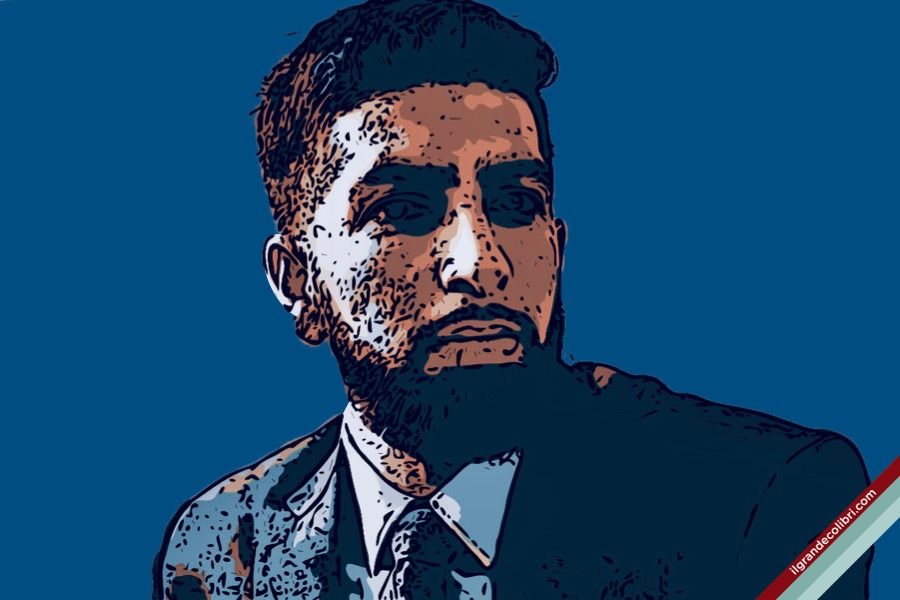
When fleeing Morocco to seek refuge in France, Samy only took the clothing he was wearing. There was no time to pack and, in any case, the bruises of old memories were more than enough luggage.
In his home country, Samy has never really been able to be himself. It was too dangerous to publicly display who you really are and absolutely impossible to be seen with another man. The danger of incurring an onslaught or ending up in prison is almost certain. “The Moroccan penal code considers homosexual relationships as immoral or unnatural acts,” the man explains in his testimony to Bladi.net. As he knows very well, the penalty ranges from six months to three years in prison.
Running from mother
That prison time can seem infinite but it is almost a trifle when compared to the years spent with his mother, his main oppressor. No matter how hard it is to admit it, it was her, the woman who gave birth to him, that turned Samy’s life into hell. “If I didn’t defend myself during a school fight; if I made a noise she didn’t consider manly; if I walked in a certain way… she’d hit me,” he recollects without hiding his sadness. If it’d been up to her, Samy would be already a family man: at 16 his mother had promised him in marriage to a girl of the same age. “Fortunately – he chaffs – the girl in question married a richer man.”
A sign of fate, which convinced Samy of the need of leaving his native country for good and fleeing to France, the country that ultimately welcomed him after five years of drifting. Unfortunately, it isn’t all roses there. Although, France is more open and welcoming than Morocco -where just last year a terrifying “gay hunt” took place triggered by the words of the influencer Sofia Taloni- one can’t say the European country is a happy island.
 Racism in France
This is confirmed by Nour, one of the founders of Mille et Une Queer (One Thousand and One Queer), a feminist organization created to give space and visibility to queer women of Maghreb origin. Through the collective’s social-media page they often have criticized “the accumulation of discriminations” that they are forced to suffer not only as women and lesbians but also as Arabs and Muslims.
“We suffer from racism every day, our problems are not understood,” bitterly underlines Assia, a young Moroccan lesbian who has found her way and courage to come out in France. A significant step forward, that still doesn’t erase the pain caused by those looks and insults that she and many other women are forced to succumb.
Indelible Pain
Memories hurt, greatly, too much. Recollecting specific episodes is really agonizing. Inès knows it well, a thirty-year-old woman who fled to France to finally be able to live a life free from stigmas and prejudices unlike in her country of origin. In Rabat, the city where she was born and raised, she left her family and, above all, the woman she loved. Kidnapped by her mother -who understood the true nature of their relationship- Inès’s partner was forced to marry a man chosen by her own family.
“This story was the straw that broke the camel’s back,” Inès told us during the interview. Staying in Rabat was impossible. The only solution was to leave her homeland as soon as possible, even though neither her escape nor the love of the woman she married in Paris will ever soothe the pain and regret for all her broken dreams.
Nicole Zaramella
translation by Barbara Burgio
©2021 Il Grande Colibrì
images: elaborations from Nicole De Khors (CC0) / from pxfuel (CC0)